
Products

The AfS Bat Brick
Over recent months, Action for Swifts has been asked many times by our customers for bespoke brick bat roosts and integral boxes. We are delighted to say we have now produced a box which, like the AfS S Brick, blends seamlessly into your building without a significant price tag!
Like the AfS S Brick, the AfS Bat Brick occupies the space of 1 brick in the outer leaf and extends into the cavity behind. With its thin steel walls, it occupies a minimum amount of space and is light weight at just 3kg. Lined with bat-friendly materials, it is fireproof and carbon-neutral - the carbon footprint of the nest chamber is similar to the displaced brick and mortar. As with all your projects, please call us on 07535270077 or email us on actionforswifts@gmail.com to discuss your requirements.


-
The AfS Bat-Brick is the result of many requests for an affordable, lighter weight, integral bat-brick which has the capacity to be made in matching facing bricks. Constructed of thin galvanised steel and strongly riveted together, the inside is made of bat friendly, untreated boards which are grooved to allow the bats to roost.
Bats access the cozy inner chamber by means of the entrance slit drilled in the front brick and then climb up a fibre-board (waterproof) ramp.
Droppings will fall out of the roost and down the ramp, keeping the inner space clean.
-
The bottom of the AfS Bat-Brick is placed on the course of bricks where the entrance is desired and the back extends UPWARDS into the cavity. Because of the dimensions it will fit easily into a 50mm or larger cavity leaving space to avoid cold bridging.
The base section is held in place with the brick course above and the facing brick is pointed in to blend seamlessly with the wall.
-
We are always happy to talk through your project to advise. If you know what you would like, simply email us at actionforswifts@gmail.com with your requirements or call us on 07535270077. Alternatively click the button below and complete the form.
We need to know the brand name and make of your bricks - or you can just send us a picture and we will match them by texture and colour


Cost £73 + VAT and Shipping
The AfS Model 30 Swift & Bat Box
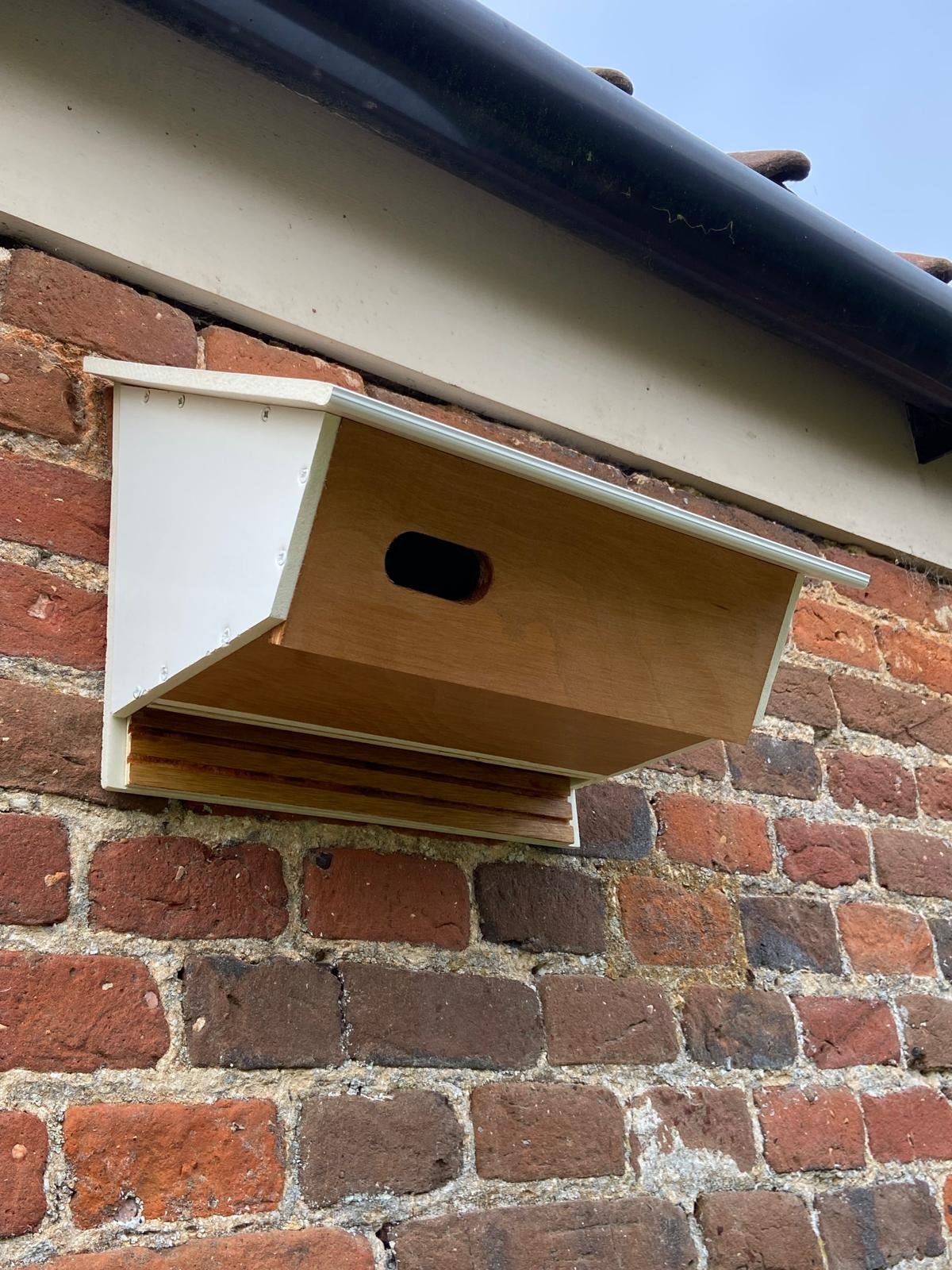
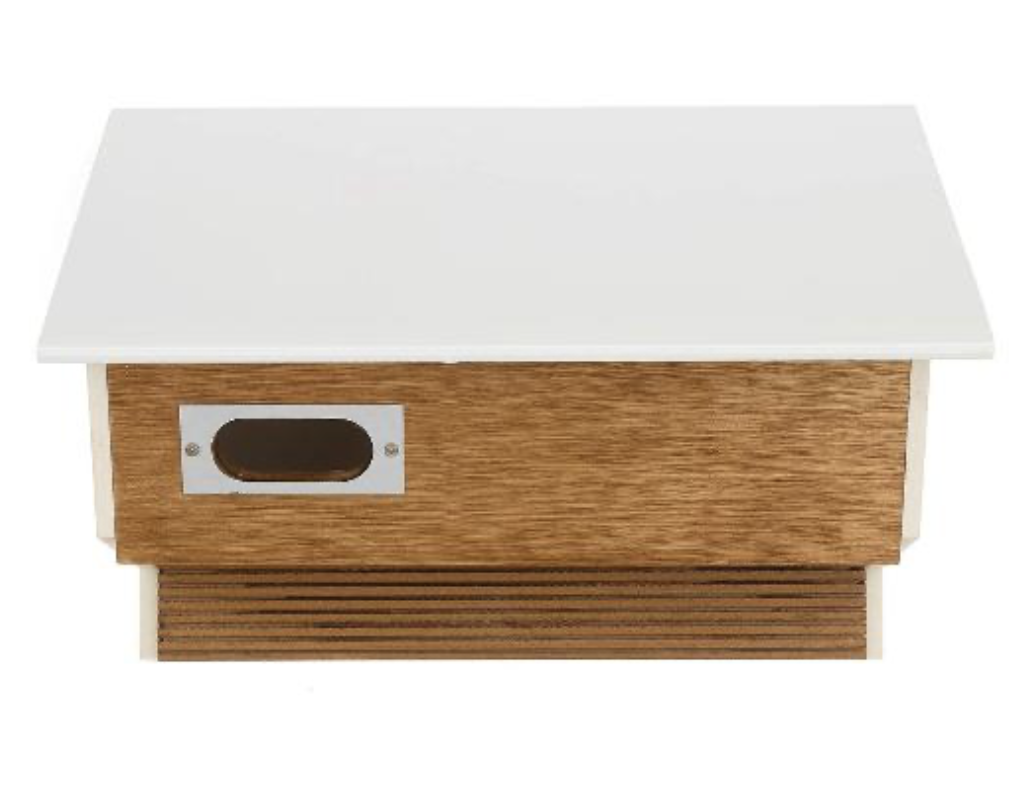
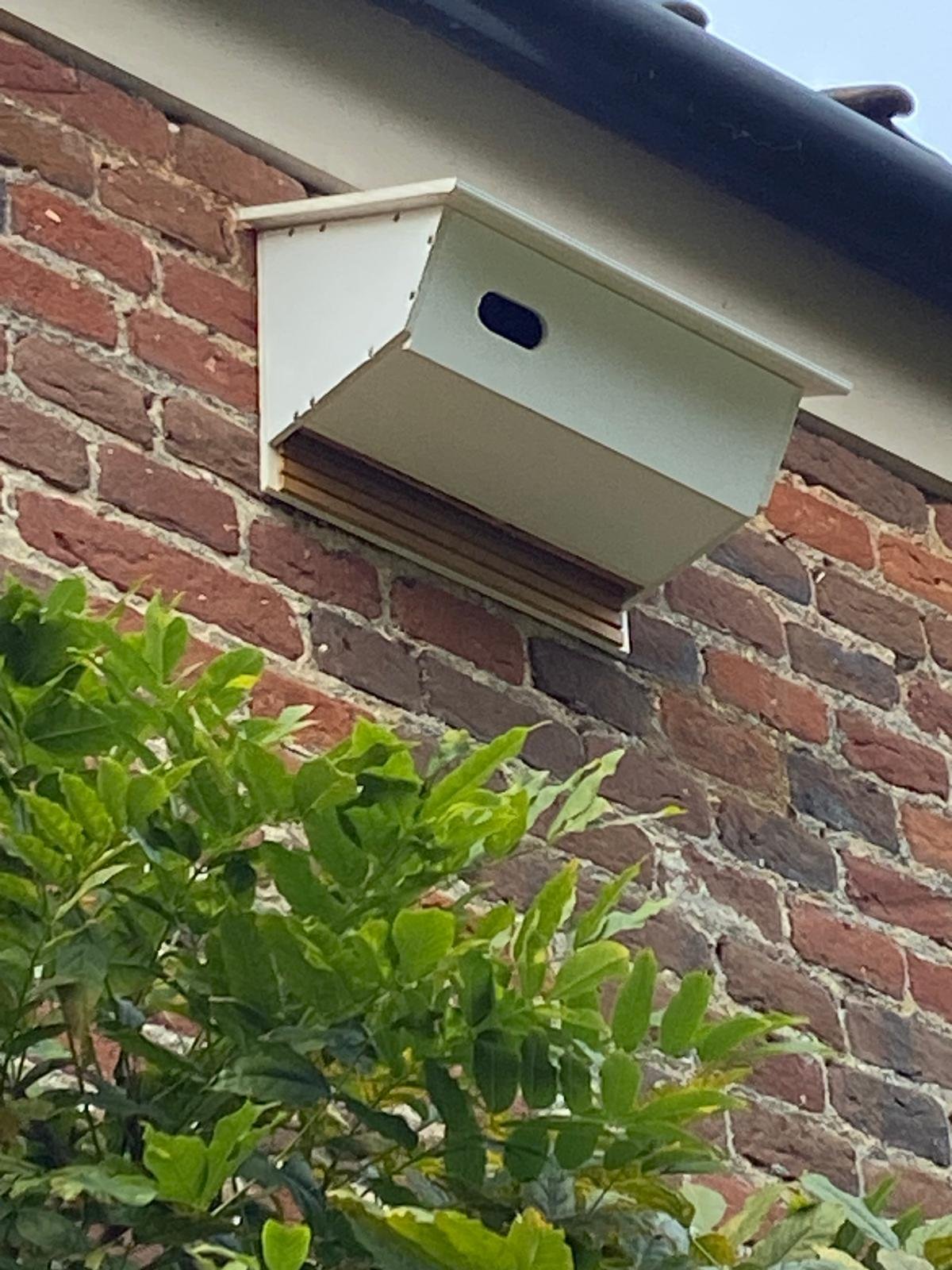
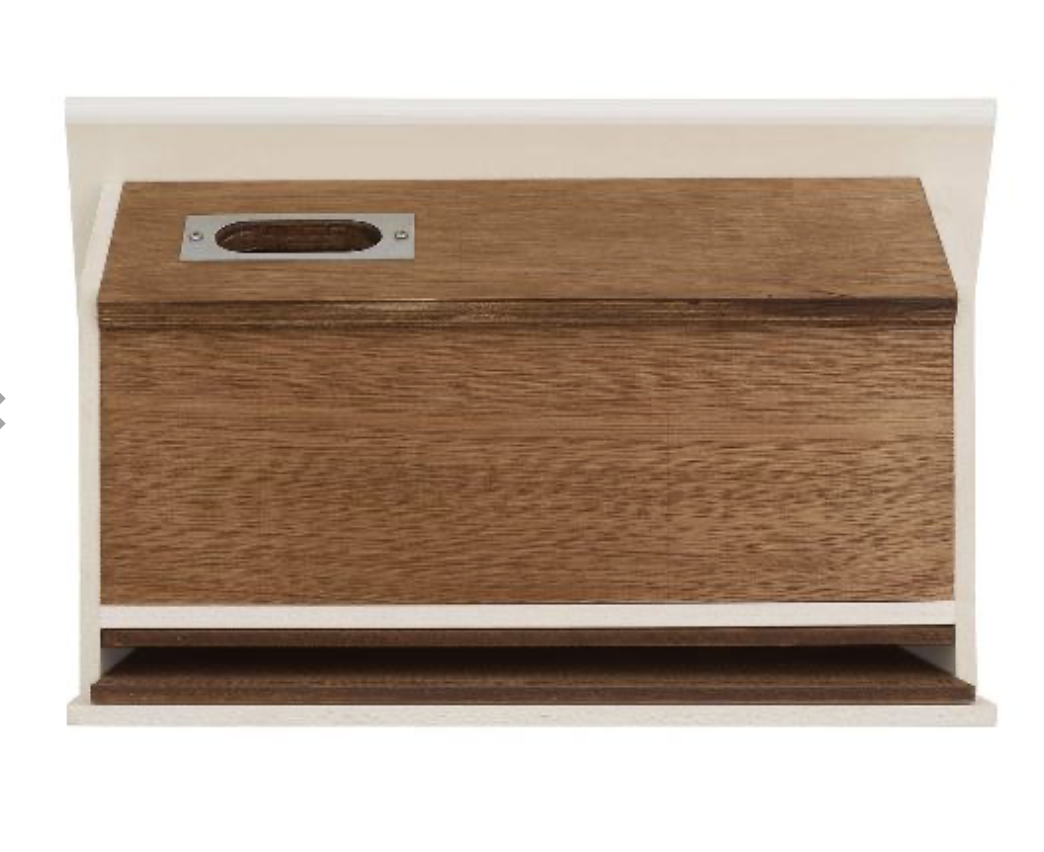
With the steady popularity of the Model 30, both in terms of our own product range and also home made versions, we have had feedback over the last three years that often bats will roost behind these externally mounted swift boxes. So we have added a cosy chamber at the back with a 20mm gap in grooved wood to provide a home for bats as well as swifts.
As an option for people looking to provide a roost for bats as well as a popular style home for swifts, we are pleased to offer this new take on an old favourite.
Available in either wholly uPVC (apart from the access ramp at the back) or a combination of uPVC and plywood, which can be finished in black or woodstain
Cost £46 plus VAT and shipping
-
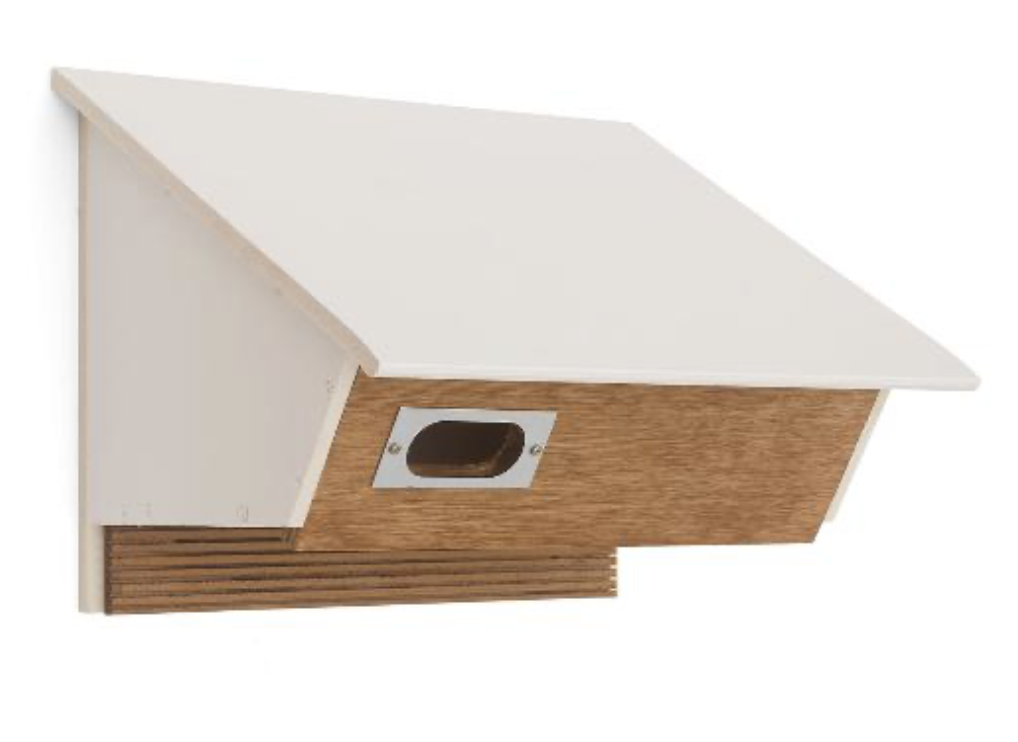
A standard Model 30 swift box, providing a spacious swift nest cavity at the front chamber, but with an additional 17mm gap and landing ramp at the back to allow bats to roost behind the box.
Dimensions: 32cms wide, 19cms high at the back and 16cms deep at the base. The ramp extends down 5cms.
Weight:
uPVC version 2.4kgs
Plywood fronted version 2.6kgs
-
These boxes should be fixed as high as possible on your wall, with a clear flyway and no vegetation in front of the bat access ramp.
They are sold fully assembled - they are fitted to the wall by use of two brackets either side..
We supply the brackets but we do not supply the screws as everyone’s requirements may be slightly different.
-
Orders can be placed by emailing actionforswifts@gmail.com or call us to discuss your requirements on 07535270077
The Manthorpe Bat Ridge Roost


Suitable roosting sites have declined in volume over recent years, but bats have an important place in the UK ecosystem. Bats are a protected species and conservation efforts are being made to preserve their roosts and habitats.
The Bat Ridge Roost, is a self contained habitat installed at the end of a ridge for the purpose of providing a suitable roosting site for small crevice-dwelling bat species such as common or soprano pipistrelles.
The roost is most likely to be used from March to October by small numbers of bats active during the period of the year between hibernation, when they require a safe place from which to forage in our towns and cities. Bats consume insects that are attracted to the vegetation and water in and around our gardens and landscapes. These provide food for the bats and contribute to a rich bio-diversity in our urban landscape.
-
The Bat Ridge Roost has been specifically designed in partnership with the Bat Conservation Trust (BCT). The product is a self contained, externally installed unit which offers no means of access for the bats to enter the property or roof void. The habitat has been tested with the BCT and Reading University, to provide a secure, accessible and trusted environment for the bats to use as a roost.
• Fast and easy to install, dry fix system.
• Provides a protected roost for small bats to inhabit.
• Roost is fully enclosed with no access to the property.
• Part of the Bat Conservation Trust Roost Partnership
• Creates a thermally stable environment for the bats to roost.
• Designed for both round concrete and clay ridge tiles.
• Provides a mechanically fixed, mortarfree solution.
• Protects the ridge end from exposure to the elements.
• Suitable for new build and refurbishment details.
• Can be installed on roof pitches between 15o and 55o.
• Drains water away from the wall to prevent staining.
• Manufactured from UV stabilised polypropylene.
The product datasheet can be downloaded here
-
The Bat Ridge Roost is optimised for use with the Manthorpe GPPV range of handed and ambidextrous dry verge systems.
The Bat Ridge Roost is also able to be used with other dry verge units not stated, including non-Manthorpe products, however there might be a potential shadow cosmetic line between the ridge roost product and the dry verge in these instances.
You can download the installation guide here
An ecologists guide to this product can be found here
-
To get a quote on this product and order please contact us on 07535270077 or email us on actionforswifts@gmail.com